


What Is
Hot-Dip Galvanizing?
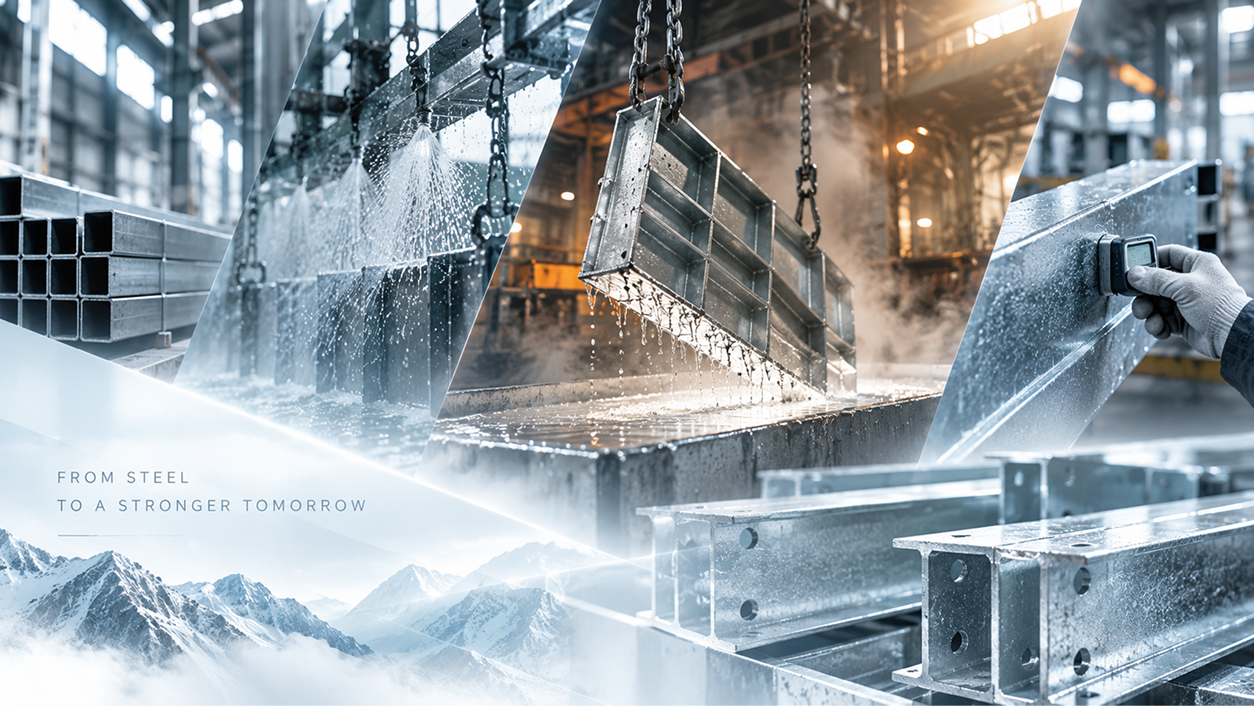
Hot-Dip Galvanizing is a process in which steel workpieces that have been surface-cleaned and pre-treated are immersed in molten zinc, causing the zinc to react with the steel surface and form a protective coating tightly bonded to the substrate.
Galvanizing a steel workpiece from arrival at the plant to completion is not simply a matter of "dipping it in zinc." Surface cleanliness, venting and drainage design, pre-treatment condition, the dipping process, and finishing and inspection afterward can all affect the final coating quality.
A complete hot-dip galvanizing process therefore starts with incoming inspection and proceeds through surface treatment, pickling, rinsing, fluxing, drying, galvanizing, cooling, finishing and quality confirmation, allowing the zinc layer to fully perform its corrosion protection role.
Removes rust, oxides and surface deposits that affect the galvanizing reaction, laying a good foundation for subsequent dipping.
When steel is immersed in molten zinc, the zinc reacts with the steel surface to form zinc-iron alloy layers and an outer zinc layer.
After dipping, the coating appearance, coverage and thickness are confirmed, followed by finishing, packaging and shipping as required.
Hot-Dip Galvanizing Manufacturing Process
From the moment a steel workpiece enters the plant, every pre-treatment and dipping step has its purpose. Good process control affects not only coating appearance but also whether the zinc layer can completely cover the steel surface and provide corrosion protection.
Incoming Inspection & Hanging
Before a workpiece enters the galvanizing process, its dimensions, surface condition and fabrication type are confirmed, and vent holes, drain holes and hanging positions are checked.
Paint, stickers, welding slag and other deposits that are difficult to remove with ordinary pre-treatment must be cleaned beforehand to avoid blocking contact between molten zinc and steel and affecting coating formation.
Pickling & Rust Removal
Pickling removes rust and mill scale from the steel surface, re-exposing a clean metal surface so that molten zinc can fully contact and react with the steel.
Rinsing
Removes residual acid and impurities from the workpiece surface after pickling, reducing the chance of acid being carried into subsequent tanks, minimizing bath contamination and maintaining pre-treatment quality.
Fluxing & Drying
Fluxing reduces the chance of the clean steel surface re-oxidizing and helps the subsequent reaction between zinc and steel. The workpiece is thoroughly dried before dipping, ready for hot-dip galvanizing.
Hot-Dip Galvanizing
Pre-treated steel workpieces are immersed in molten zinc, where the zinc reacts with the steel surface to gradually form zinc-iron alloy layers and an outer zinc layer.
After dipping, the withdrawal of the workpiece is controlled so that excess zinc flows back into the kettle, followed by cooling and surface finishing.
Cooling & Surface Finishing
Workpieces are cooled as required, and zinc spikes, sharp protrusions and other areas that may affect handling, construction or installation are finished, maintaining coating protection while meeting subsequent usage requirements.
Quality Inspection
After dipping and surface finishing, coating appearance, coverage and thickness are inspected, and quality is confirmed according to the applicable standards and customer requirements.
Packaging & Shipping
After quality confirmation, workpieces are arranged and packaged according to their characteristics and transport needs before shipping is scheduled. From incoming workpieces, surface pre-treatment and hot-dip galvanizing to final inspection and shipping, every step together forms a complete hot-dip galvanizing manufacturing process.
Why Is Hot-Dip Galvanizing
Is pre-treatment really that important?
The core of hot-dip galvanizing is allowing molten zinc to fully contact and react with a clean steel surface. Therefore, thesurface pre-treatment before entering the zinc kettle is a very important part of the entire process.
If paint, stickers, welding slag, rust or other deposits that cannot be effectively removed remain on the steel surface, they may block contact between molten zinc and the steel, affecting local coating formation.
This is why hot-dip galvanizing is not just the single step of "dipping in zinc," but requires a step-by-step sequence of incoming inspection, surface cleaning, pickling, rinsing, fluxing and drying.
Workpiece design also affects
the hot-dip galvanizing process
For hollow parts, box structures or more complex steel components, vent holes, drain holes and hanging positions must be confirmed before dipping. Proper workpiece design helps pre-treatment solutions and molten zinc flow in and out smoothly, and also facilitates subsequent process operations.
From Coating Formation to Quality Confirmation
Completing the hot-dip galvanizing does not mean the process is over. Workpieces still need cooling, surface finishing and quality confirmation to check that the coating completely covers the steel surface and that appearance and thickness meet the applicable standards and customer requirements.
Only by linking pre-treatment, dipping and final inspection can a completesteel hot-dip galvanizing manufacturing process be formed, allowing the coating to provide its intended protection in the service environment.
Hot-Dip Galvanizing Process FAQ
Q1. What are the main steps of hot-dip galvanizing?
The hot-dip galvanizing process includes incoming workpiece inspection, surface pre-treatment, pickling, rinsing, fluxing and drying, hot-dip galvanizing, cooling and finishing, and quality inspection. The actual treatment is arranged according to workpiece size, structure and surface condition.
Q2. Why is pickling needed before hot-dip galvanizing?
Pickling mainly removes rust and mill scale from the steel surface to expose clean metal. If rust or oxides are present on the surface, they may block subsequent contact and reaction between molten zinc and the steel.
Q3. Do paint, stickers or welding slag affect hot-dip galvanizing?
They may. Some paint, stickers, welding slag or other deposits are not easily removed completely by ordinary pre-treatment. If these deposits block contact between molten zinc and the steel surface, they may affect local coating formation, so they should be properly cleaned beforehand.
Q4. Why do vent holes and drain holes need to be confirmed?
For hollow parts, box structures or other steel workpieces with internal spaces, proper venting and drainage design helps treatment solutions and molten zinc flow in and out smoothly. These designs must therefore be checked at the incoming and hanging stages to ensure they suit the subsequent dipping process.
Q5. What inspections are needed after hot-dip galvanizing?
After dipping and surface finishing, the coating appearance, coverage and thickness are confirmed, and quality is verified according to the applicable standards and customer requirements before packaging and shipping are arranged.